Two Telluric Giants: Geological Profiles & Magma Systems
SÍNTESIS CLAVE: Mount Bromo (2,329 m) and Kawah Ijen (2,386 m) display two complementary, awe-inspiring manifestations of Ring of Fire volcanism. Bromo is a bustling, ash-venting sand caldera, while Ijen is an intensely acidic stratovolcano harboring the planet's largest hyper-acidic lake.
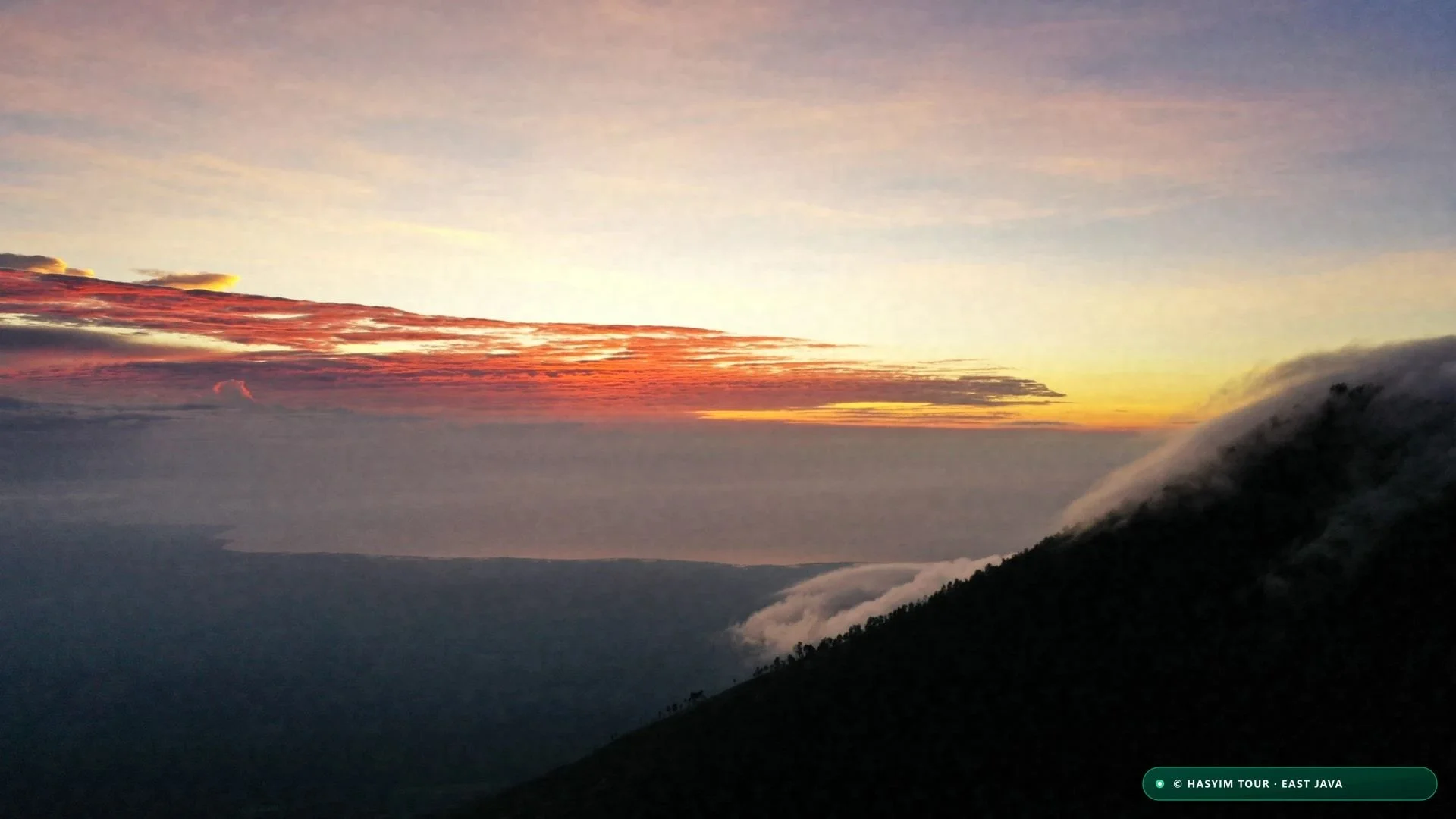
The Indonesian island of Java serves as our planet's most densely concentrated volcanological laboratory. Born from the relentless tectonic subduction of the oceanic Indo-Australian plate beneath the continental Sunda Plate at an active velocity of 6 to 7 centimeters annually, Java's volcanic arc bristles with more than 45 historically active stratovolcanoes. Among this immense archipelago of cones and calderas, two giants separated by 220 kilometers stand out as global natural wonders: Mount Bromo and Kawah Ijen.
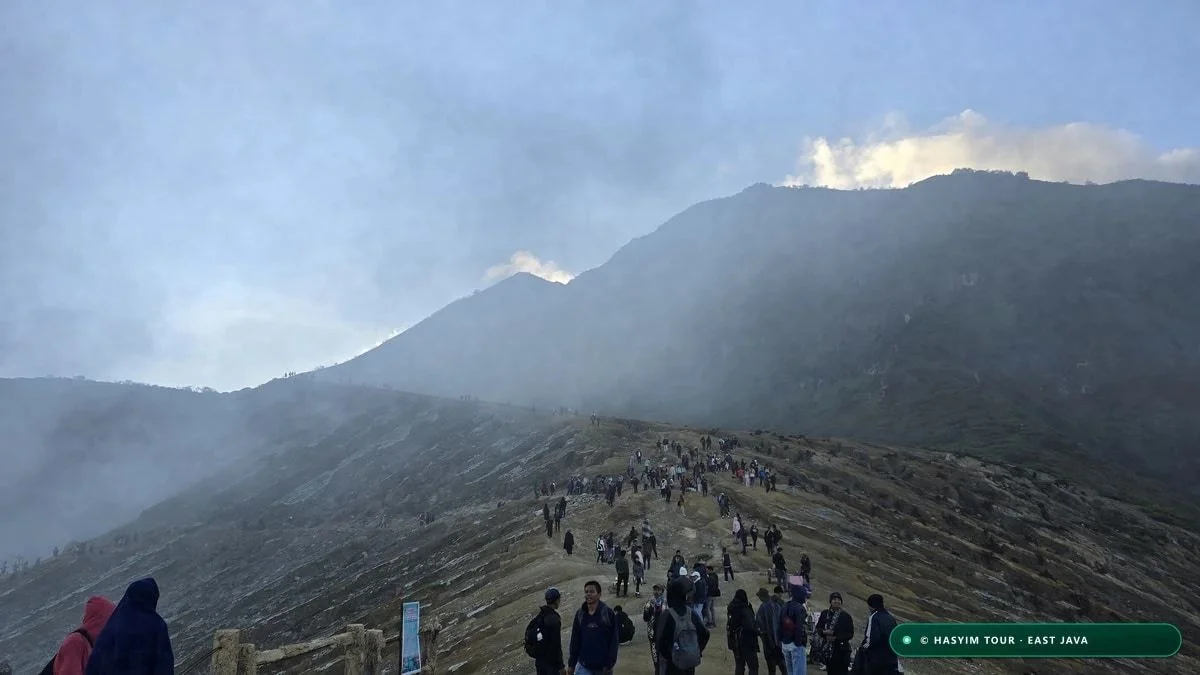
Mount Bromo (Gunung Bromo, 2,329 m) is not an isolated mountain peak, but the most dynamically active pyroclastic cone situated within the monumental Tengger Caldera. Spanning nearly 10 kilometers across east to west, this colossal caldera was hollowed out by massive collapse eruptions during the Late Pleistocene epoch. The flat floor of this depression forms an otherworldly 5,290-hectare desert of volcanic sand and ash known as the 'Sea of Sand' (Laut Pasir). Rising from this grey expanse, Bromo's open crater vent continuously discharges dense plumes of steam and sulfurous gas with a low-frequency rumble reminiscent of a roaring jet engine.
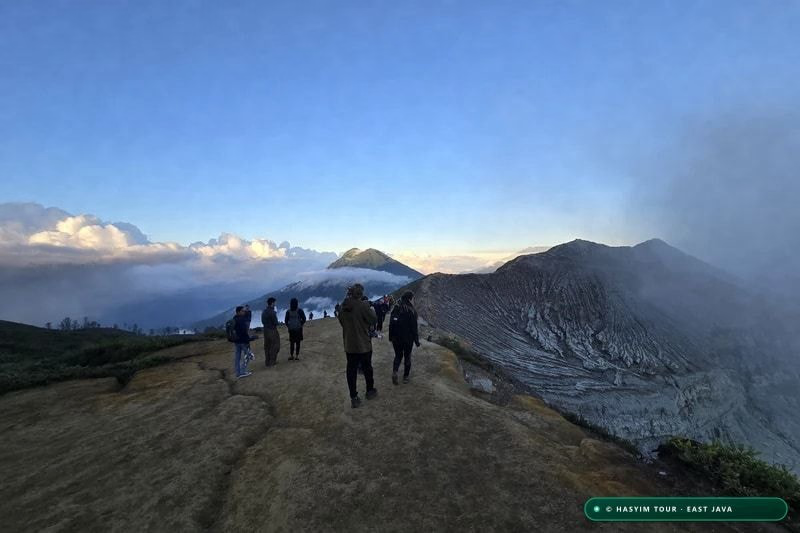
At the eastern extremity of Java, Kawah Ijen (Gunung Ijen, 2,386 m) crowns the ancient Ijen Caldera complex—a 20-kilometer-wide amphitheater carved by the catastrophic blast of Old Ijen some 50,000 years ago. Its summit crater encloses one of the most extreme hydrothermal environments on Earth: a 36-million-cubic-meter lake of brilliant turquoise water boasting an unprecedented pH of 0.2 to 0.3—chemically equivalent to concentrated industrial battery acid—saturated with dissolved metals and sulfate ions. Para planificar las fechas ideales según el clima, revise nuestra guía meteorológica para visitar Kawah Ijen.
What elevates Kawah Ijen to international fame is its active solfatara field situated on the inner eastern crater shore. Through natural fractures and ceramic condenser pipes installed by local workers, elemental sulfur vapors escape under high pressure at temperatures between 350°C and 600°C. In the pitch darkness of night, these escaping sulfur gases ignite spontaneously on contact with atmospheric oxygen, creating mesmerizing cascades of electric cobalt-blue flames (Blue Fire) that flow down the crag like luminous magma.
Combining Mount Bromo and Kawah Ijen in a single journey delivers a complete masterclass in volcanic diversity: transitioning from the vast, cinematic open spaces of a sunlit volcanic sand sea to the intimate, incandescent chemistry of a roaring subterranean sulfur furnace.
"Bromo connects you with the cosmic expanse of the skies and the primordial pulse of our planet at dawn; Ijen plunges you deep into the glowing chemical laboratory of the Earth."
| Geological Attribute | Mount Bromo (Tengger Massif) | Kawah Ijen (Ijen Volcanic Complex) | Traveler Consequence |
|---|---|---|---|
| Volcanic Structure | Pyroclastic cone inside vast caldera | Stratovolcano with summit crater lake | Flat sandy plains vs steep mountain ridge climbs |
| Peak Elevation | 2,329 m (Viewpoint at 2,770 m) | 2,386 m (Crater rim) | Severe alpine cold at Bromo, windy crater at Ijen |
| Primary Activity | Continuous ash venting & strombolian bursts | High-temperature solfataras & acid lake | Airborne mineral dust vs corrosive chemical acid fumes |
| Dominant Gas Species | Water vapor (H2O), CO2, minor SO2 | Dense SO2, H2S, and highly corrosive HCl | Dust buff sufficient at Bromo; ABEK1 mask needed at Ijen |
| Last Significant Eruption | 2019 (1-km-high ash dispersal) | 1817 (Catastrophic acid lake mudflow) | Monitored 24/7 by Indonesian PVMBG volcanologists |
- Active plate subduction: Indo-Australian plate diving beneath Java at 6-7 cm per year.
- Tengger Caldera (Bromo): 10-kilometer-wide amphitheater encompassing a 5,290-hectare sand sea.
- Kawah Ijen Acid Lake: 36 million m³ of hyper-acidic turquoise water with pH 0.2-0.3.
- Electric Blue Fire: Spontaneous combustion of high-temperature sulfur vapors above 360°C.
- Unrivaled geological harmony: Experiencing raw ash plumes followed by nighttime volcanic fires.
Comprehensive Comparative Matrix (15 Key Criteria)
SÍNTESIS CLAVE: Our exclusive 15-criteria comparative matrix benchmark pits Mount Bromo directly against Kawah Ijen. It compares elevations, trail distances, physical demand, departure times, equipment needs, and safety rules to optimize your travel logistics.
Thorough preparation for an East Java expedition requires eliminating any confusion between the respective logistical demands of Mount Bromo and Kawah Ijen. Although commercial tour operators frequently market both sites together as a single package, their trail physicalities, sleep schedules, and gear requirements are fundamentally different.
At Mount Bromo, mechanical transport handles the vast majority of physical exertion. Specialized 4WD Toyota Land Cruiser jeeps cross the rugged Sea of Sand and climb the winding mountain roads to the premier sunrise viewpoints. Hikers only need to walk across flat volcanic ash (or ride a Tengger pony) and climb an engineered 250-step concrete staircase to stand at the rim of the active, roaring crater.
In contrast, Kawah Ijen provides zero mechanical assistance up the mountain slopes. The 3-kilometer trail from Paltuding base camp to the crater rim involves 450 vertical meters of sustained ascent on steep grades that frequently reach 20% to 25%. Reaching the iconic blue flames demands an additional 800-meter technical scramble down loose rocky scree into the interior caldera.
Regarding circadian schedules, Bromo requires a 02:45 AM departure to catch the 05:15 AM sunrise over the sea of clouds. Ijen, meanwhile, requires waking at midnight sharp to begin climbing by 02:00 AM, ensuring you reach the solfatara vents while the blue flames are still visible against the deep night sky before morning twilight at 04:45 AM.
The comparative matrix below details all 15 key technical parameters to help you tailor your physical conditioning, clothing choices, and expedition timeline.
"Bromo is an accessible visual feast for any traveler with warm clothing; Ijen is an authentic high-altitude trek and sensory challenge that you will remember for the rest of your life."
| Technical Criterion | Mount Bromo (Tengger) | Kawah Ijen (Banyuwangi) | Verdict & Recommendation |
|---|---|---|---|
| 1. Summit Altitude | 2,329 m (Active crater lip) | 2,386 m (Caldera rim) | Virtually identical summit elevations |
| 2. Viewpoint Elevation | 2,770 m (Penanjakan) / 2,650 m (King Kong) | 2,386 m (Eastern crater rim) | Bromo overlooks are significantly higher (+380 m) |
| 3. Vertical Elevation Gain | +150 m (From Sea of Sand parking) | +450 m continuous (From Paltuding base) | Ijen demands 3 times more muscular effort |
| 4. Round-Trip Hike Distance | 2.5 km total (Crater staircase) | 6.5 km total (Rim ascent + crater descent) | Ijen is a full 4-hour mountain trekking session |
| 5. Physical Exertion Type | Gentle ash walk + 250 concrete stairs | Strenuous uphill trekking (sustained 22% ramps) | Ijen heavily engages quadriceps and calves |
| 6. Wake-Up Schedule | 02:15 AM early morning | 00:00 AM (Midnight sharp) | Ijen requires much earlier circadian disruption |
| 7. Minimum Temperature | 0°C to 5°C pre-dawn (Frost possible) | 4°C to 8°C on exposed windy rim | Bromo pre-dawn temperatures feel far colder |
| 8. 4WD Jeep Assistance | Mandatory (Vintage Toyota FJ40 fleet) | Unnecessary (Paved access road to base camp) | Bromo requires Paguyuban jeep booking |
| 9. Respiratory Defense | Surgical dust mask or fabric neck buff | Certified ABEK1 chemical gas mask mandatory | Zero compromise: chemical filter cartridges essential at Ijen |
| 10. Eye Protection | Standard sunglasses for dust protection | Airtight safety goggles strongly advised | Corrosive sulfur fumes cause intense eye watering at Ijen |
| 11. Health Certifications | No medical certificate required | Official Surat Keterangan Sehat mandatory | Rapid medical clinic screening required for Ijen entry |
| 12. Child Accessibility | Excellent for ages 5+ (Pony rides available) | Recommended only for fit children aged 10-12+ | Bromo is significantly more family-friendly |
| 13. Peak Visual Highlight | 05:15 AM (Golden sunrise over caldera) | 03:45 to 04:30 AM (Midnight electric blue fire) | Bromo is a dawn spectacle; Ijen peaks in total darkness |
| 14. Foreign Visitor Entry Fees | IDR 220,000 (Weekday) / 320,000 (Weekend) | IDR 100,000 (Weekday) / 150,000 (Weekend) | Bromo national park entry tariffs are slightly higher |
| 15. Total Time on Site | 4h30 duration (03:00 - 07:30) | 6h00 duration (01:30 - 07:30) | Ijen requires a longer, more immersive morning |
- Mechanical vs manual access: Bromo relies on 4WD Toyota jeeps; Ijen is 100% on foot over steep trails.
- Vertical elevation gain: +150 m easy climb at Bromo vs +450 m steep grade at Ijen plus 200 m caldera descent.
- Wake-up timings: 02:15 AM at Bromo for sunrise vs 00:00 midnight at Ijen for nocturnal blue fires.
- Respiratory protection: Light dust buff for Bromo ash vs certified ABEK1 chemical gas mask for Ijen sulfur fumes.
- Medical prerequisites: No medical clearance for Bromo; mandatory official health certificate for Kawah Ijen.
The Optimal 48-Hour Expedition Master Itinerary
SÍNTESIS CLAVE: Our calibrated 48-hour master schedule links Surabaya to Mount Bromo on Day 1, followed by the trans-Java overland crossing to Kawah Ijen and the Bali ferry on Day 2 with zero wasted transit time.
Completing both of Java's premiere volcanic giants in a 48-hour window is a logistical achievement that succeeds only when vehicle connections, rest periods, and hiking departures operate with clockwork precision.
The expedition launches on Day 1 at 08:30 AM in Surabaya (airport or railway station). Following a smooth 3-hour drive along the Trans-Java highway to Probolinggo and winding up the lush slopes of the Tengger massif, you arrive in Sukapura around 12:30 PM. After enjoying local highland dishes, you check into your hotel by 02:00 PM. The afternoon is spent enjoying a relaxed stroll along the Cemoro Lawang crater rim watching twilight settle over the volcanic sand sea, followed by a warm dinner at 06:30 PM and lights out by 08:30 PM.
Day 2 is the critical hinge of the journey: wake-up at 02:15 AM, private 4WD jeep departure at 02:45 AM, and arriving at King Kong Hill for the magnificent 05:15 AM sunrise. You then descend to cross the Sea of Sand and climb Bromo's active crater rim by 07:00 AM. Returning to your hotel by 09:30 AM for a hot shower and hearty breakfast, you pack your bags and board your private van at 11:00 AM for the 5.5-hour trans-Java highway journey to Banyuwangi, pausing for a seaside grilled seafood lunch in Situbondo. Para enriquecer este viaje con cascadas, explore nuestro circuito 3 días Bromo, Ijen y Tumpak Sewu.
By 05:00 PM, you check into a peaceful eco-resort nestled among rice terraces in Licin or Banyuwangi near the foot of Mount Ijen. This is the crucial safety window: your guide inspects your 3M ABEK1 gas masks, tests headlamp batteries, and briefs you on the midnight trek over a relaxed Osing dinner. Rooms go dark at 08:00 PM sharp to ensure 4 hours of deep restorative sleep.
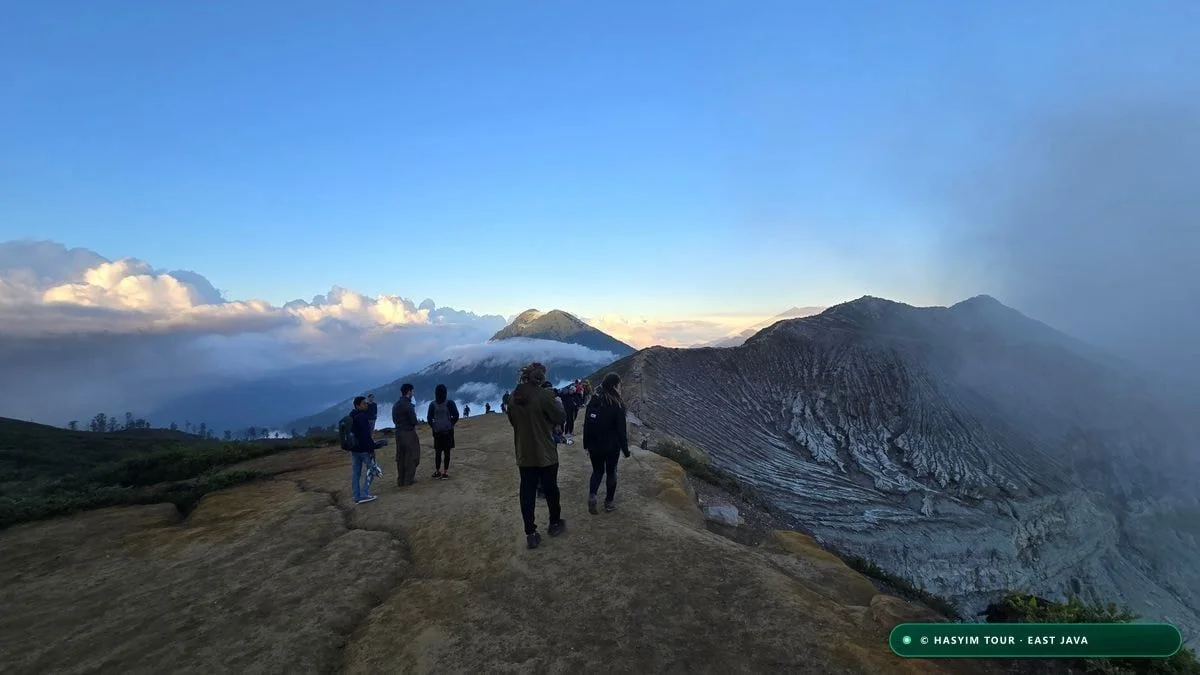
The final midnight ascent crowns the journey: departing at midnight, you arrive at Paltuding base camp by 01:15 AM, start hiking at 02:00 AM, witness the blue fire between 03:45 and 04:45 AM, and gaze upon the vast turquoise acid lake as the sun rises at 05:30 AM. After returning to your resort for a shower and breakfast, you transfer to Ketapang Seaport for the 10:30 AM car ferry, stepping ashore in Bali by 12:15 PM local time.
"Within 48 hours, you journey from modern Surabaya to the freezing dawn rims of Bromo, cross through tropical plantations, and finish beside a turquoise volcanic lake before reaching Bali at noon."
| Day & Time | Waypoint & Location | Elevation | Signature Milestone | Pro Tip |
|---|---|---|---|---|
| D1 - 08:30 | Surabaya (Airport SUB / Station) | 10 m | Private van pickup and tour departure | Charge phones and stow luggage |
| D1 - 13:00 | Sukapura / Cemoro Lawang | 1,900 m - 2,200 m | Arrive in Bromo region, highland lunch | Acclimatize to crisp mountain air |
| D1 - 16:00 | Cemoro Lawang Caldera Rim | 2,200 m | Sunset walk overlooking the Sea of Sand | Sip hot ginger tea at local warung |
| D1 - 20:30 | Bromo Hotel Room | 2,200 m | Strict bedtime to prepare for early wake-up | Lay out thermal layers for 02:15 AM |
| D2 - 02:45 | 4WD Toyota Jeep Departure | 2,200 m -> 2,650 m | Night ascent up King Kong Hill switchbacks | Bundle up in down jacket and beanie |
| D2 - 05:15 | BROMO SUNRISE APEX | 2,650 m | Breathtaking dawn light over Batok & Semeru | Set up camera tripod on rocky outcrop |
| D2 - 07:00 | Active Bromo Crater Rim | 2,100 m -> 2,329 m | Cross Sea of Sand and climb 250 steps | Pull buff over nose to block volcanic dust |
| D2 - 11:00 | Drive to Banyuwangi | 220 km (5.5 hrs) | Scenic trans-Java highway journey eastward | Take restorative power naps in AC van |
| D2 - 17:00 | Ijen Hotel Check-in (Licin) | 500 m | Check into tranquil eco-resort among rice fields | Inspect ABEK1 gas masks with guide |
| D2 - 20:00 | Lights Out & Early Sleep | 500 m | Crucial 4-hour restorative rest period | Sleep soundly before midnight departure |
| D3 - 00:15 | Midnight Van Transfer | 500 m -> 1,850 m | Drive up forested slopes to Paltuding base | Verify headlamp battery and water bottles |
| D3 - 02:00 | Begin Ijen Night Trek | 1,850 m -> 2,386 m | Starlit ascent along mountain pathway | Maintain steady, rhythmic walking pace |
| D3 - 04:00 | BLUE FIRE PHENOMENON | 2,140 m (Caldera base) | Witness electric cobalt sulfur flames | Fasten ABEK1 gas mask securely to face |
| D3 - 05:30 | SUNRISE OVER ACID LAKE | 2,386 m | Dawn reveals world's largest turquoise acid lake | Capture panoramic landscape photos |
| D3 - 10:30 | Ketapang Ferry Terminal | 0 m | Board ASDP roll-on/roll-off car ferry | Relax on 45-minute Bali Strait crossing |
| D3 - 12:15 WITA | Arrive in Gilimanuk (Bali) | Gilimanuk Harbor | Meet private Balinese driver at the terminal | Note the +1 hour local timezone shift |
- Day 1 Surabaya pickup (08:30): scenic ascent to Bromo and golden sunset over Cemoro Lawang.
- Day 2 Bromo telluric dawn (02:15 - 08:30): 4WD sunrise, roaring crater climb, and mountain breakfast.
- Trans-Java overland transit (11:00 - 17:00): coastal highway drive with relaxing van power naps and seafood.
- Day 3 Ijen midnight trek (00:00 - 08:00): electric blue flames, turquoise acid lake, and resort shower.
- Bali arrival (12:15 WITA): seamless 45-minute ASDP ferry crossing with private Bali driver meetup.
Alpine Physics, Adiabatic Gradients & Hypothermia Defense
SÍNTESIS CLAVE: High volcanic ridges at Bromo and Ijen trigger severe thermal drops: environmental adiabatic lapse rates drag temperatures down to 0°C before dawn, creating real hypothermia risks for unprepared travelers.
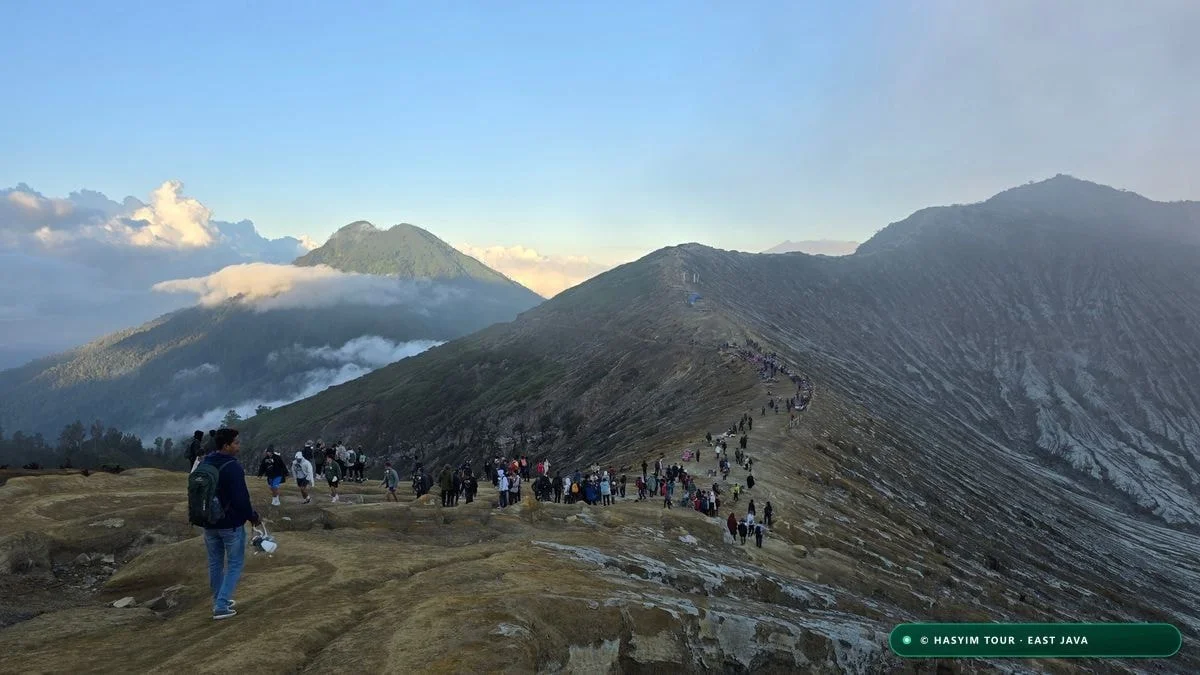
One of the most pervasive and dangerous mistakes international visitors make when exploring Indonesia is cognitive climate bias: expecting an equatorial country to remain perpetually warm, many pack only lightweight t-shirts, shorts, or thin cotton jackets, finding themselves utterly unprepared for high-altitude thermodynamic realities.
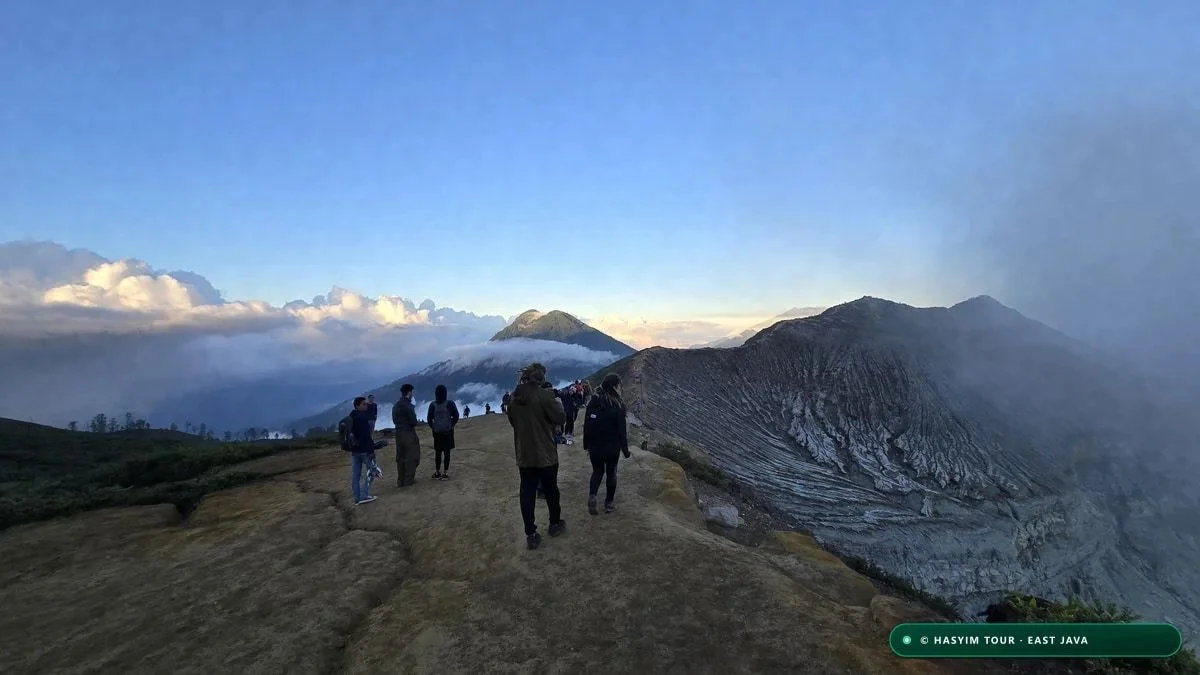
Atmospheric physics applies universal, unforgiving laws. The environmental adiabatic lapse rate dictates an average temperature drop of 0.65°C for every 100 meters of vertical ascent. Departing sea-level temperatures of 28°C in Surabaya or Banyuwangi, the baseline ambient temperature at 2,650 meters (the elevation of King Kong Hill) drops naturally to approximately 10°C during daylight hours. But before dawn, between 03:00 and 05:00 AM, intense nocturnal radiational cooling under clear skies allows ground heat to dissipate into space, plunging temperatures between 0°C and 4°C.
During the southern hemisphere dry season (June through September), dry, cold polar air masses sweeping northward from Antarctica frequently trigger a localized microclimate phenomenon known as embun upas: ground frost that coats the volcanic sand of the Tengger caldera in crystalline ice, with air temperatures dropping to -2°C to -3°C.
Compounding this low ambient temperature is the windchill effect. On exposed ridges like Penanjakan or the narrow lip of Kawah Ijen, persistent winds blowing at 30 to 45 km/h strip body heat rapidly, plunging the sensible temperature to between -5°C and 0°C. If clothing is damp with sweat from the rigorous uphill climb at Ijen, evaporative cooling puts hikers at immediate risk of acute numbness and early-stage hypothermia.
To combat these mountain conditions, our safety protocol mandates a modular three-layer clothing system: a moisture-wicking synthetic base layer (polyester or merino wool, strictly avoiding cotton which traps sweat), an insulating thermal mid-layer (fleece jacket or packable down jacket), and a windproof, waterproof hardshell outer layer. A fleece beanie covering the ears and lightweight trekking gloves are essential to maintain comfort and focus.
"At 2,600 meters under Indonesian stars, high mountains show no mercy to improvisation: the cold is as real and penetrating as on any European alpine summit."
| Expedition Location | Elevation (m) | Ambient Temperature | Windchill Sensible Temp | Recommended Apparel |
|---|---|---|---|---|
| Coastal Transit (Surabaya / Licin) | 10 m - 500 m | 24°C to 30°C | 26°C to 32°C | Light tropical summer travel clothing |
| Paltuding Base Camp (Ijen Trailhead) | 1,850 m | 12°C to 15°C | 11°C to 13°C | Trekking pants, moisture-wicking shirt, fleece |
| Cemoro Lawang Highland Village | 2,200 m | 8°C to 12°C | 6°C to 10°C | Thermal fleece jacket, down jacket accessible |
| Bromo Crater Rim (Sea of Sand) | 2,329 m | 10°C to 16°C | 8°C to 14°C | Windproof outer layer, neck buff for ash dust |
| King Kong Hill (Bromo Sunrise) | 2,650 m | 1°C to 5°C | -2°C to 2°C | Full 3-layer system, beanie, thermal gloves |
| Penanjakan 1 (Bromo Summit) | 2,770 m | 0°C to 4°C | -4°C to 0°C | Heavy down jacket zipped, windproof headwear |
| Kawah Ijen Upper Caldera Rim | 2,386 m | 4°C to 8°C | 0°C to 4°C | Windproof hardshell, warm beanie, gas mask ready |
- Adiabatic vertical lapse rate: automatic temperature decline of 0.65°C per 100 m elevation gain.
- Windchill on exposed volcanic ridges: 40 km/h gusts dropping felt temperatures below freezing.
- Embun upas frost phenomenon: seasonal sub-zero ground freezing (-2°C) in July and August at Bromo.
- The three-layer rule: technical wicking base (no cotton), thermal fleece/down mid-layer, and hardshell outer.
- Essential cold-weather accessories: thermal fleece beanie, warm gloves, and adjustable neck gaiter.
Respiratory Safety & Volcanic Gas Toxicology
SÍNTESIS CLAVE: Inhaling acidic volcanic gases inside Kawah Ijen's crater poses genuine chemical risks. Only tight-fitting half-mask respirators equipped with certified ABEK1 chemical cartridges guarantee complete protection against sulfur dioxide and hydrochloric acid.
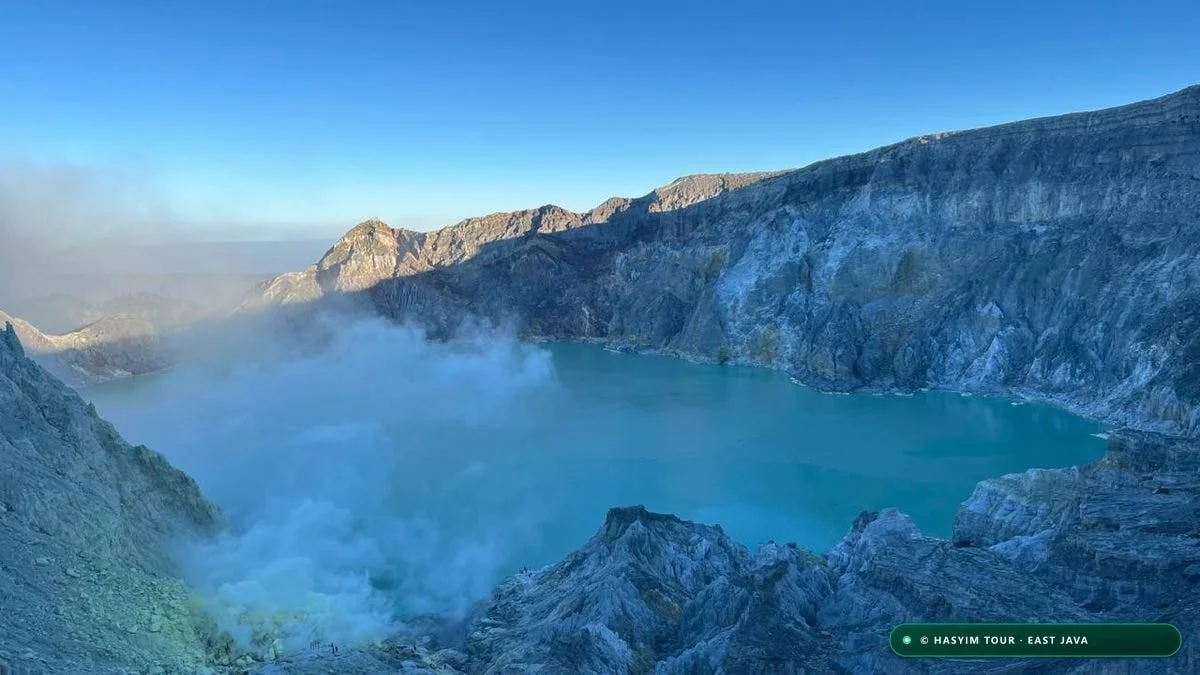
While Mount Bromo presents primarily a mechanical respiratory challenge from windblown volcanic ash dust (easily mitigated by wearing a fabric bandana or neck buff), Kawah Ijen introduces travelers to a severe industrial-grade chemical toxicological environment.
Fumarolic emissions at Kawah Ijen comprise a complex cocktail of highly concentrated acid gases: sulfur dioxide (SO2), hydrogen sulfide (H2S), hydrogen chloride (HCl), and trace hydrofluoric acid (HF). Sulfur dioxide is a colorless, pungent, and violently irritating gas. Under international workplace safety guidelines (OSHA and NIOSH), the permissible exposure limit (PEL) is strictly capped at 5 ppm (parts per million). Yet inside Ijen's crater bowl near the sulfur condensing pipes, shifting wind gusts can cause ambient concentrations to spike past 40 to 80 ppm.
Inhaling air containing over 10 ppm of SO2 causes severe spasmodic coughing fits, intense eye tearing, chemical burns along the pharyngeal mucous membranes, and reflex bronchospasm. At concentrations exceeding 50 ppm, acute chemical pulmonary edema can develop—representing a life-threatening medical emergency inside a steep volcanic crater lacking rapid road evacuation.
In this environment, utilizing simple paper surgical masks, cloth bandanas, or dust-grade N95/FFP2 respirators is medically useless: particulate filters stop only solid physical dust and allow 100% of gaseous acid molecules to pass straight into the lungs. Only elastomeric half-face respirators fitted with combination ABEK1 chemical cartridges (conforming to European Standard EN 14387) chemically neutralize inorganic acid vapors.
At Hasyim Tour, every guest receives a certified international-brand half-mask respirator (3M 6200 Series or equivalent) at Paltuding base camp, fully sanitized and pre-inspected. Guides conduct a negative-pressure seal check before beginning the descent. Furthermore, wearing contact lenses inside the crater is strictly forbidden: acid vapors dissolve into the eye's tear film to form dilute sulfuric acid underneath the lens, risking severe corneal damage.
"Inside Ijen's crater, your gas mask is not an Instagram photo prop: it is the essential chemical shield that turns a hazardous volcanic environment into an awe-inspiring wonder."
| Respiratory Protection Device | Bromo Ash Filtration | Ijen Acid Gas Filtration | Real World Safety Index | Safety Verdict |
|---|---|---|---|---|
| Cotton Bandana / Neck Buff | Fair (60%) | ZERO (0% gas filtration) | DANGEROUS at Ijen crater | Acceptable only for Bromo dust |
| Blue Surgical Paper Mask | Poor (40%) | ZERO (0% gas filtration) | COMPLETELY USELESS | Forbidden for use on active volcanoes |
| Dust Mask N95 / FFP2 | Excellent (95%) | ZERO (Passes all chemical gas) | FALSE SENSE OF SECURITY | Great for Bromo ash, dangerous at Ijen |
| Elastomeric Half-Mask ABEK1 | Maximum (100%) | COMPLETE (Chemical SO2 absorption) | ABSOLUTE SAFETY (10/10) | MANDATORY STANDARD at Hasyim Tour |
| Full-Face Panoramic Respirator | Maximum (100%) | COMPLETE + Integrated eye protection | OPTIMAL (Maximum Comfort) | Ideal for travelers with sensitive eyes |
- Ijen chemical gas cocktail: SO2 (sulfur dioxide), H2S (hydrogen sulfide), and corrosive HCl vapors.
- Dangerous ambient spikes: sulfur concentrations reach 20-60 ppm inside crater (OSHA limit is 5 ppm).
- Ineffectiveness of dust masks: paper and N95 masks provide zero defense against acidic gas molecules.
- Mandatory ABEK1 standard: active carbon cartridges designed to neutralize inorganic acid vapors.
- Strict contact lens ban: moisture creates acid buildup under lenses; wear prescription glasses with safety goggles.
Sacred Tengger Hindu Lore & Ethical Miner Solidarity
SÍNTESIS CLAVE: Beyond geological spectacles, exploring Bromo and Ijen is an authentic human encounter: the 500-year-old Hindu Majapahit heritage of the Tengger people and the extraordinary physical courage of Ijen's traditional sulfur miners require deep ethical respect.
Reducing an expedition across Bromo and Ijen to mere sightseeing and landscape photography misses the most profound dimension of East Java: the anthropological depth and spiritual resilience of the local communities living in intimate coexistence with these volatile volcanic mountains.
Surrounding the Tengger Caldera resides the Tenggerese people—a unique highland enclave of approximately 100,000 souls. When the great Hindu-Buddhist Majapahit Empire collapsed in the late 15th century, their ancestors fled into the remote highlands to preserve their traditional religion and way of life. Today, they practice an archaic form of Javanese Hinduism (Agama Hindu Dharma), venerating the god of fire Brahma (from whom Bromo derives its name) and their legendary founding ancestors, Princess Rara Anteng and Jaka Seger.
Every year during the twelfth month of the Tengger lunar calendar, the community gathers for the sacred Yadnya Kasada festival. Thousands of pilgrims assemble at Pura Luhur Poten on the caldera floor before climbing to the crater rim in a solemn procession to cast offerings of rice, fruit, livestock, and vegetables into the roaring volcano to give thanks and ensure community prosperity. Reserve sin intermediarios con nuestros tours privados por volcanes, conozca a nuestro guía Hasyim y escríbanos por WhatsApp.
At Kawah Ijen, human encounters center around the legendary traditional sulfur miners. Every night, while international travelers marvel at the electric blue fire, these resilient men descend directly into the smoking solfataras to break apart cooled slabs of solidified sulfur with iron bars. They load these heavy sulfur blocks into twin bamboo baskets balanced across their calloused shoulders, hoisting immense loads weighing between 70 and 90 kilograms.
Miners then carry these crushing loads 200 meters up the sheer rocky crater wall and 3 kilometers down the mountain trail to the Paltuding weighing station, earning a modest wage per kilogram from the sulfur refinery. At Hasyim Tour, our community solidarity protocol is built on tangible commitments: we employ native guides from mining families, support village health clinics, and train travelers to always yield the trail right-of-way to miners and purchase their handmade sulfur carvings directly to provide fair income.
"Watching miners shoulder 80-kilo baskets up Ijen's steep trails teaches profound humility: our fundamental duty is ensuring tourism delivers direct dignity and economic support to their families."
| Local Community | Location | Cultural Heritage / Role | Key Contemporary Challenges | How Travelers Can Support |
|---|---|---|---|---|
| Tengger Hindu People | Bromo Highlands (Cemoro Lawang, Sukapura) | Highland agriculture, Bromo worship, Majapahit rituals | Preserving cultural identity amidst massive tourism growth | Respect sacred shrines, hire local cooperative jeeps |
| Traditional Sulfur Miners | Tamansari & Licin Villages (Banyuwangi) | Manual extraction and portage of sulfur (70-90 kg) | Severe physical strain and toxic respiratory exposure | Yield the trail, buy hand-carved sulfur souvenirs |
| Osing Mountain Guides | Banyuwangi foothills and plains | Bilingual trail guidance and regional cultural narration | Seasonal employment fluctuations during rainy months | Book direct tours avoiding exploitative OTA middleman cuts |
| Paguyuban 4WD Drivers | Sukapura & Wonokitri Cooperatives | Rugged 4WD navigation across the Sea of Sand | High mechanical maintenance costs for vintage Toyota fleet | Honor established cooperative pricing without aggressive bargaining |
- Majapahit sacred heritage: The Tengger people have safeguarded highland Javanese Hinduism for over five centuries.
- Yadnya Kasada ceremony: Ancient annual ritual casting agricultural offerings into Bromo's crater to honor Brahma.
- Incredible miner resilience: Traditional manual portage of 70-90 kg sulfur loads across steep volcanic trails.
- Trail etiquette rules: Always give miners full right-of-way; never block their path for photographs.
- Ethical community tourism: Employing native local guides, paying fair wages, and supporting Tamansari village families.
Preguntas Frecuentes
Preguntas Frecuentes sobre la Expedición
What is the best time of year to visit both Mount Bromo and Kawah Ijen?
The dry season between May and October is the premier time to visit. Rainfall is minimal, sunrise visibility over the Tengger caldera is exceptionally clear, mountain trails remain dry and secure, and nocturnal blue fire viewing at Kawah Ijen reaches peak brilliance due to the absence of monsoon cloud cover.
Is the Kawah Ijen trek suitable for young children or seniors?
Mount Bromo is highly accessible for all ages thanks to 4WD jeeps and optional pony rides across the sand. Kawah Ijen, however, requires a strenuous 3 km uphill trek and a rocky crater descent that is not recommended for children under 10 or travelers with respiratory or cardiovascular issues. For those with mobility constraints, local wheeled trolleys (taxis) can be hired at Paltuding to reach the summit rim.
Are professional gas masks strictly mandatory at Kawah Ijen?
Yes. Indonesian park authorities (BKSDA) and our professional guides require certified ABEK1 chemical respirators on the crater rim and during the descent. Without proper chemical filtration, inhaling high concentrations of sulfur dioxide (SO2) causes severe respiratory distress and lung irritation.
Can I wear contact lenses when descending into Kawah Ijen crater?
Wearing contact lenses inside the crater is strongly discouraged. Airborne acid fumes react with moisture in the eyes to create dilute sulfuric acid trapped beneath the lens, causing severe corneal irritation. We advise wearing standard prescription eyeglasses with protective safety goggles over them.
How many days should I allocate for a combined Bromo and Ijen tour?
A 3-day / 2-night (3D2N) itinerary is ideal. It allows you to explore Mount Bromo, Tumpak Sewu waterfall, and Kawah Ijen at a relaxed, comfortable pace. While an express 2-day / 1-night tour from Surabaya to Bali is technically possible, it is physically grueling due to back-to-back early wake-ups.
Why is the blue fire at Kawah Ijen only visible at night?
The electric blue flames result from sulfur gases igniting at temperatures above 360°C. Because blue flames emit light at a modest intensity within the visible spectrum, sunlight easily washes out the color during the day. The phenomenon is clearly visible only in complete darkness between 02:00 and 04:30 AM.
Is a medical health certificate required to climb Kawah Ijen?
Yes. Under BKSDA regulations, all visitors must present an official medical certificate (Surat Keterangan Sehat) confirming normal blood pressure and absence of severe respiratory conditions. Hasyim Tour packages include taking you to an authorized local clinic in Banyuwangi for a quick screening (IDR 25,000 to 50,000).
What happens if a volcanic crater is temporarily closed due to volcanic activity?
Guest safety is always our paramount priority. If the Indonesian Geological Agency (PVMBG) raises the volcanic alert level and temporarily closes a crater, our certified guides seamlessly redirect the tour to vetted alternative highlights (such as outer caldera lookouts, Madakaripura Waterfall, or Baluran National Park safari).
Mejor Época para Visitar Kawah Ijen: Clima y Fuego Azul
Matriz climática mes a mes, temperaturas nocturnas en la cumbre y condiciones óptimas para el fuego azul.
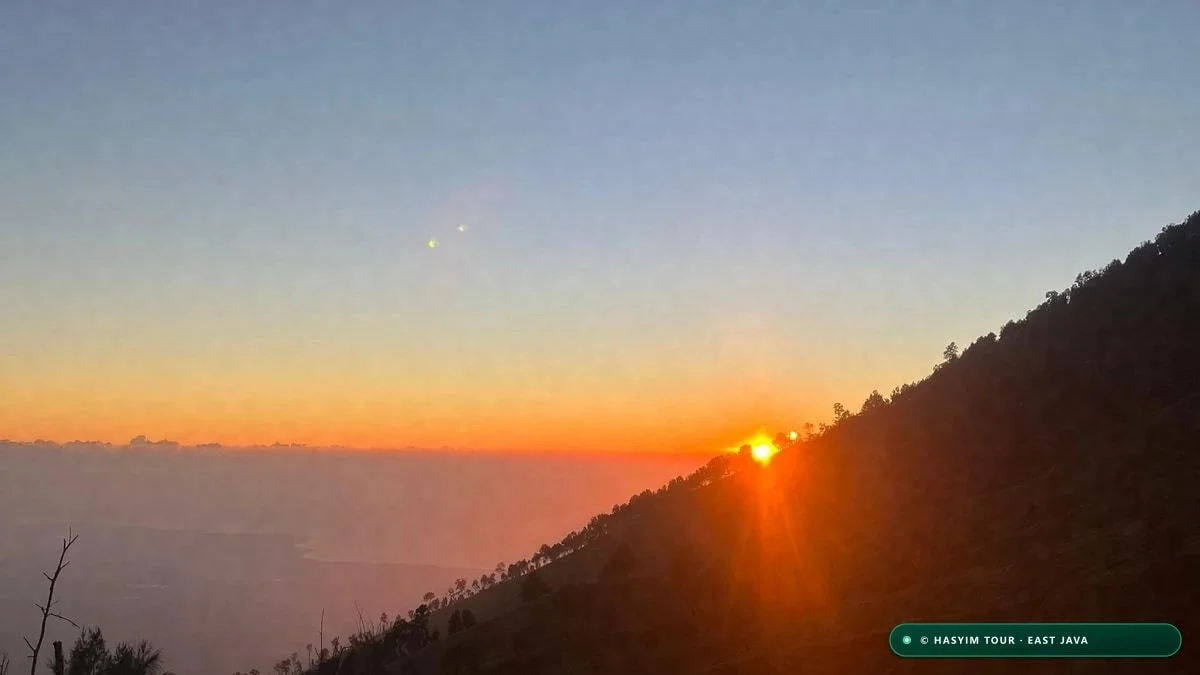
Guía del Amanecer en el Monte Bromo: Miradores, Penanjakan y Jeep 4x4
Comparativa de 5 miradores, logística nocturna en jeep y ascenso al cráter activo.
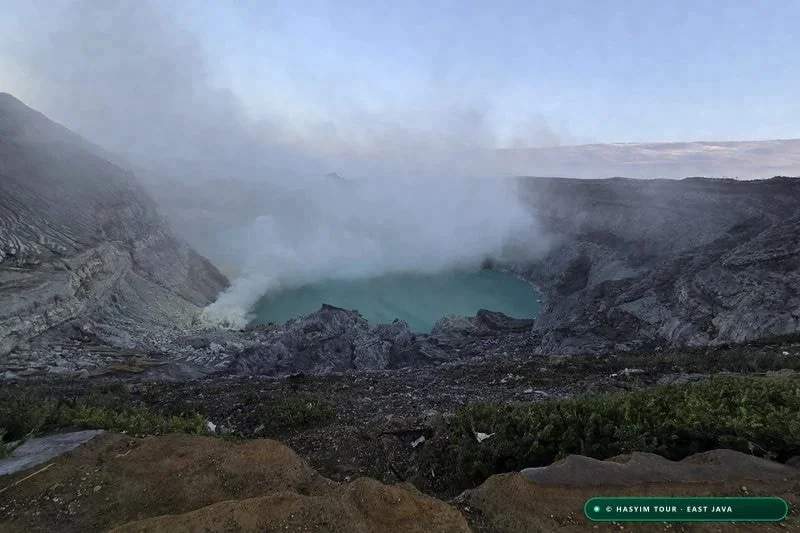
Precios y Tarifas Tours Kawah Ijen y Bromo 2026: Costos Reales, Entradas y Guía Directo
Transparencia total de costes: entradas oficiales, máscaras ABEK1, jeeps 4x4 y ventajas de contratación directa.